
Adopt Mātauranga Māori in Digital Tech
Press the ▶️ button at the top-right of the page to view the presentation.
Adopt Mātauranga Māori in Digital Tech
- Curriculum Development
- matuadoc.co.nz
Mātauranga Māori
- How to integrate it in Digitech
- Adopt a holistic approach
- Mātāpono Māori
- Challenges
Mātauranga Māori at my kura
- Emphasis is placed on Pākehā ways of knowing and doing
- Pākehā ways of knowing and doing are considered “normal”
- Often mātauranga Māori has been introduced as separate, complementary, or additional
- Pākehā views, values, and perspectives dominate
- The marginalisation of Māori occurs as a result
Refresher: what is the purpose of MM in the NZC?
- To turn this…
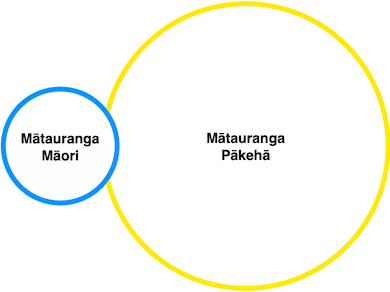
Refresher: what is the purpose of MM in the NZC?
- To turn this… into this!
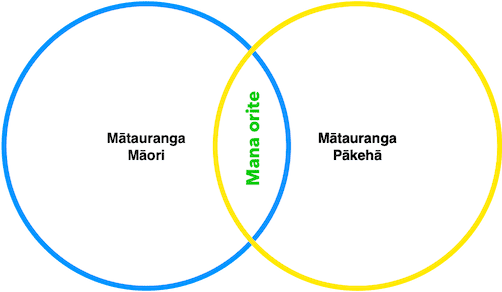
But how?
Good news and bad news
It doesn’t matter what you do
It matters where that comes from!
The major differences between Mātauranga Pākehā & Māori
Atomistic vs holistic view
Relevant vs Primordial
Considerations for “fitness for purpose”, “appropriateness”, and “Relevant implications” are made in view of:
- The outcome’s purpose
- The outcome’s end users
- The outcome’s context
They happen at the start of the project and come back at the end
In a holistic view, these considerations are primordial
- They are integral to every single aspect of the project
- Rather than being considered only at the beginning, they should be examined and re-examined at every stage of the development process
Atomistic vs holistic course design
But what to consider?
So far I’ve talked a lot about context and how it is as one with the skills, outcome, etc.
But what must be considered?
According to the Digital Technologies Learning Matrix (for Level 6), students will “understand how digital technologies impact on end users by considering the following mātāpono Māori”
Embed mātāpono Māori
Kotahitanga: unity, collaboration, and collective action
Whanaungatanga: a sense of relationship, connection, and belonging
Manaakitanga: the process of showing respect and care; reciprocity between people, living things, and places
Kaitiakitanga: guardianship, stewardship for living things and resources
Tikanga: the system of values and practices that have developed over time and are deeply embedded in traditional and social context; the correct way of doing things
How to embed mātāpono Māori
- Mātāpono Māori are values derived from te ao Māori and mātauranga Māori
- They are a fantastic drop-in replacement for “relevant implications”
- However, unlike relevant implications where students pick a couple, students should consider all of these at all times
- Let’s start by using a whakatauki…
Whakatauki
Kaua e rangiruatia te hāpai o te hoe e kore tō tātou waka e ū ki uta
- Don’t paddle out of unison
- Our canoe will never reach the shore
Kotahitanga
Unity, collaboration, and collective action
Kotahitanga means “oneness”
This describes togetherness, solidarity, and working together for a shared goal
This means looking at:
- End user considerations
- Secondary stakeholders
- Local community needs
- Iwi/hapu needs
Kotahitanga — Issues
- If a digital technology outcome is not designed with stakeholders in mind, decisions will reflect the developer rather than the stakeholders
- This means the outcome might not fulfil its purpose
- It might also work in contradiction to the values of those affected by it
- It’s important the design process incorporates feedback from:
- The people for whom the outcome is being designed and developed
- Those who may be impacted (communities, iwi/hapu, etc.)
- Do not dismiss opinions as invalid just because you disagree
Kotahitanga — Addressing issues
- Be very clear about the purpose of the outcome right from the start
- To inform
- To educate
- To entertain
- To persuade
- Be very clear about for whom the outcome is intended
- Who are the primary end users?
- Who are the secondary end users?
- Who are the other stakeholders who benefit indirectly?
- Clarity about purpose and users helps designers and developers steer the waka to the intended port
Whanaungatanga
- A sense of relationship, connection, and belonging
- Whanaungatanga refers to connectedness and relationships
- The outcome integrates with and follows the norms of the societies and cultures in which it is located
- The outcome treats those communities and their people inclusively, with respect
Whanaungatanga — Issues
- If an outcome is not designed to integrate within its society, users may feel put off or discriminated against
- Failure to integrate can include:
- Non-inclusive design or discriminatory content
- Not following social norms (too formal, too much slang, etc.)
- Unusual use of colours or icons, contrary to users’ expectations
- Language learned from the internet can be insensitive, ableist, racist, xenophobic, sexist, or bigoted without realising
- But anything you can learn, you can also un-learn
- It’s important we work together with all kinds of people
Whanaungatanga — Addressing issues
- Avoid content or design that alienates, excludes, or disparages people across:
- Nationalities and cultures
- Belief systems
- Sexualities and gender identity
- Physical and mental ability
- Do tone checks, sensitivity checks, and consult with groups who may be affected
- Trial the outcome with end users during development to ensure it meets expectations
- Inclusive outcomes ensure nobody is left outside the waka
Manaakitanga
- Showing respect and care
- Reciprocity between people, living things, and places
- Manaakitanga refers to caring for others and their wellbeing, to elevate their mana
- Prioritise design and outcomes that show respect and care
- Design with accessibility in mind so it’s usable by everybody
- Overlap with whanaungatanga
Manaakitanga — Issues
- If an outcome is not easy to operate, end users will not achieve their goals
- This defeats the purpose of the outcome
- Usability principles can make programs and websites work in the service of all
- Consider the needs of people with:
- Low vision, colour blindness, etc.
- Hearing loss or deafness
- Dyslexia, autism, or other processing difficulties
Manaakitanga — Addressing issues
- Evaluate your design and outcome against Nielsen’s 10 Usability Heuristics
- Use accessibility tools such as:
- Contrast checkers
- Screen readers
- Writing checkers
- Collect feedback from people affected by conditions such as:
- Low vision or blindness
- Hearing loss or deafness
- Dyslexia, autism, or other processing difficulties
- Ensuring everybody can use the outcome helps all move together
Kaitiakitanga
- Guardianship and stewardship for living things and resources
- Kaitiakitanga means “guardianship”
- Ensure the outcome minimises harm to the environment
- Where harm cannot be avoided: what do we give back? How do we heal?
- Ensure the outcome does not cause people physical or mental harm
Kaitiakitanga — Issues
- If an outcome does not account for environmental impact, it could cause harm
- Inefficient programs use more CPU and therefore more energy
- Requiring the latest devices can treat older machines as e-waste
- Outcomes should take care not to damage the user’s computer
Kaitiakitanga — Addressing issues
- Prioritise less intensive technologies
- Avoid unnecessary JavaScript
- Choose efficient algorithms
- Measure energy impact using resource monitors and debugging tools
- Design and develop outcomes that operate well on more than just the latest devices
- We ride the waves, we respect the winds; those who don’t, their waka capsizes
Tikanga
- Values and practices deeply embedded in traditional and social context
- The correct way of doing things
- Tikanga means “the correct way of doing things”
- Ensure the outcome embodies the values of the societies in which it’s used
- The outcome must not break the law in the places it’s used
- Respect intellectual property and copyright
- Law is a kind of tikanga
Tikanga — Issues
- Failing to embody ethical values risks alienating users or promoting harmful views
- Not abiding by laws (IP, copyright, privacy) can create liability
- Intellectual property and copyright mean respecting:
- Other people’s designs
- Inventions
- Patents and copyrights
- Privacy means:
- Treating private information with respect
- Not sharing with unauthorised parties
- Taking responsibility for leaked data
Tikanga — Addressing issues
- Be aware of relevant laws and regulations, namely:
- Privacy laws
- Harmful digital communications laws
- Intellectual property laws
- We all row the waka together; remember who else is holding the paddle
Other challenges
- Much of digital technologies teaching comes from overseas (favouring kaupapa Pākehā)
- How can we embed kaupapa Māori without:
- Adding unnecessarily to the documentation workload of students?
- Confusing students about what is “correct” — KM or KP?
- Allowing non-Māori students to continue to see themselves in learning and assessment?
A. Adding to the workload for students
- Students should consider the mātāpono at every stage in the project
- Does that mean writing about them at each stage?
- In each iteration?
- For every component?
- You don’t need to record this evidence
- If you want to, use alternative evidence such as video/audio interviews
- Example prompt: “How do you feel your work this sprint reflects manaakitanga?”
B. Confusing students as to what is “correct” — KM or KP?
- For our curriculum area, “correct” vs “incorrect” is the wrong framing
- It’s not a zero sum game
- For MM to be right, MP doesn’t have to be wrong
- MP is not the bad guy
- They should have mana orite — they are equal
- Be up front with your students
- Don’t try to “hide” it
- “We are using MM as our framework”
- “We are doing so for these reasons…”
- “It is different from MP in these ways…”
- “They are similar in these ways…”
C. Allowing non-Māori students to continue to see themselves
- Make it crystal clear: using MM as a framework does not inherently mean MP is out
- Encourage students to find the connections
- Discuss what is valuable about both approaches
- Depending on the context, explicitly looking at other approaches (e.g., Pasifika) may be appropriate
- These can still be related back to MM
- Bridging Pasifika ways of thinking to MM should be fairly easy